What is Indoor Tracking? A Beginner’s Guide to Indoor Tracking Technology
Why GPS stops at the door, and how indoor positioning fills the gap.
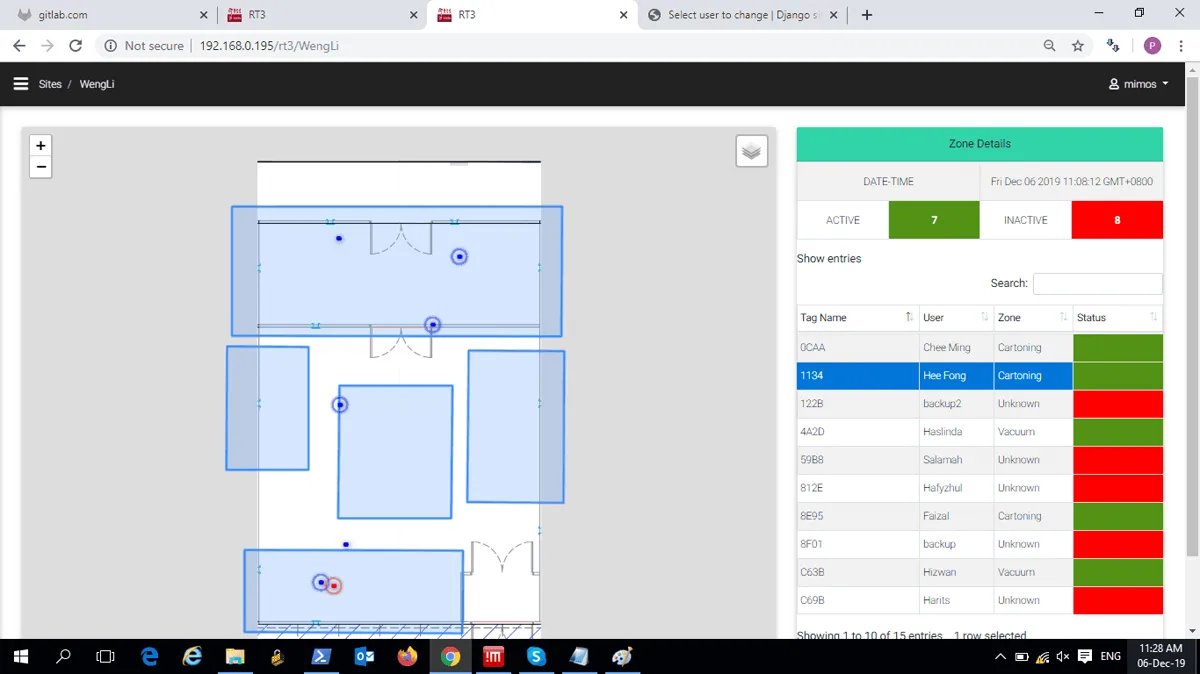
In today's fast-paced, data-driven world, knowing where things and people are, in real time, is no longer a luxury. It's a necessity. GPS revolutionised how we navigate outdoors, but it doesn't work well inside buildings. That's where indoor tracking comes in.
Whether you manage a hospital, warehouse, factory or office, indoor tracking can give you powerful insight into the movement of people, assets and processes. In this article, we explain what indoor tracking is, how it works, and why it's becoming essential for modern operations.
What is indoor tracking?
Indoor tracking, also known as Real-Time Location Systems (RTLS), is technology that monitors the location of people, equipment or assets inside buildings such as factories, hospitals, retail stores or offices.
Unlike GPS, which relies on satellite signals, indoor tracking uses technologies such as RFID, Bluetooth Low Energy (BLE), Wi-Fi and Ultra-Wideband (UWB) to provide location data within buildings.
How does indoor tracking work?
An indoor tracking system typically has:
- Tags or trackers: Devices attached to assets or worn by people that emit signals.
- Anchors or sensors: Fixed devices that receive signals from tags to calculate positions.
- Gateways: Devices that collect data from anchors and send it to servers.
- Central server and software: Processes location data and presents it on dashboards for analysis.
Introducing Teksoft's InTRAC system
One notable indoor tracking solution is the InTRAC system. Designed for smart industries and IoT applications, InTRAC uses Ultra-Wideband (UWB) technology to provide real-time tracking with an accuracy of 15–20 cm.
Key features of InTRAC
- Real-time location tracking: See locations instantly with live updates on an interactive dashboard.
- Human and asset tracking modes: Choose between tracking people or assets to improve workplace efficiency.
- Custom geofencing and zones: Set up virtual boundaries for key areas, assign tasks to work zones, or designate spaces for stationary assets.
- Insights and reports: Get detailed analytics, including time spent in zones, movement patterns and heatmaps, for informed decisions.
- Playback and history review: Replay past movements to analyse trends and improve operations.
- Seamless API integration: Connect location data with other systems for custom applications and monitoring.
What can indoor tracking be used for?
InTRAC's versatile design suits many applications, including:
- Manufacturing: Monitor equipment and people to optimise workflows.
- Healthcare: Track medical equipment and patient movements for better care.
- Inventory management: Keep real-time visibility of stock levels and locations.
- Smart buildings: Improve security and operational efficiency with precise location tracking.
Benefits of indoor tracking
Indoor tracking systems like InTRAC offer many advantages:
- Operational efficiency: Streamline processes by understanding movement patterns and optimising layouts.
- Improved safety: Quickly locate people during emergencies and monitor access to restricted areas.
- Data-driven decisions: Use analytics to make informed decisions about resource allocation and process improvements.
- Integration with existing systems: Bring location data into existing IT and ERP systems for a complete picture.
Is indoor tracking right for you?
If you face challenges like misplaced equipment, inefficient workflows or poor space utilisation, indoor tracking could be a game-changer. Start small, tracking a few assets or one department, and scale up as you see the benefits.
Indoor tracking is more than a fancy way to locate items. It's a foundational technology for smart facilities, Industry 4.0 and digital transformation. By making the invisible visible, InTRAC gives organisations the power to act faster, more safely and more smartly.
Next, read Choosing the Right Indoor Tracking Technology: RFID, BLE, Wi-Fi or UWB? to compare the main technologies and decide which suits your needs.